
For many parents and adults, the N‑600, Application for Certificate of Citizenship, is the key to proving that a person is already a U.S. citizen by law—either by birth or through automatic acquisition after birth. Unlike naturalization, the N‑600 does not make someone a citizen; it is used to recognize and document citizenship that already exists under the law.
Here is a step‑by‑step guide to the N‑600 process and what to expect at each stage.

Step 1: Determine Whether the Applicant Should Apply for a U.S. Passport or the N-600
Before filing anything, the most important step is determining which application is appropriate:
- A U.S. passport application, or
- Form N‑600, Application for Certificate of Citizenship
Both are used to document U.S. citizenship, but they serve different purposes and have different risks.
Why this decision matters
Many people do not realize that the N‑600 is essentially a one‑time opportunity. If an N‑600 was previously filed and denied, USCIS will not allow the person to file again. In those situations, the individual may permanently lose the ability to obtain a Certificate of Citizenship.
Because of this, it is often safer to apply for a U.S. passport first, especially when:
- The facts are unclear
- The evidence is incomplete
- The law is complicated due to the applicant’s date of birth
- There are questions about custody, residence, or the parent’s physical presence
A U.S. passport application can be re‑filed multiple times, and if approved, it becomes strong evidence of citizenship that can later support an N‑600 filing.
Confirm eligibility before filing
Before choosing a path, an experienced immigration attorney should review:
- The applicant’s date of birth
- Whether the parent was a U.S. citizen at the relevant time
- Whether the child was a lawful permanent resident (if required)
- Whether the child was in the legal and physical custody of the U.S. citizen parent
- Whether the parent met the physical presence requirements
- Whether an N‑600 was previously filed and denied

Step 2: Prepare and file Form N 600 with supporting documents
Once eligibility is confirmed, the next step is to complete and file Form N‑600 with USCIS. The application should be accurate, consistent, and supported by strong documentation.
Common supporting documents include:
- Child’s birth certificate
- Parent’s U.S. passport, naturalization certificate, or birth certificate
- Marriage certificate or divorce decrees (if relevant)
- Proof of legal and physical custody
- Proof of the child’s lawful permanent resident status (if required)
- Evidence of the parent’s physical presence in the U.S. (for certain cases)
Filing a complete and well‑documented N‑600 can help avoid delays, Requests for Evidence (RFEs), or denials.

Step 3: Receive the N-600 receipt notice
After filing, USCIS will issue a receipt notice confirming that they received the N‑600. This notice includes:
- The applicant’s receipt number
- The date USCIS received the application
You can use this number to track the case status online. It is important to keep this notice in a safe place.

Step 4: Attend a biometrics appointment (if required)
In many cases, USCIS will schedule a biometrics appointment at a local Application Support Center (ASC). At this appointment, USCIS may collect:
- Fingerprints
- Photograph
- Signature
Biometrics are used for background checks and identity verification. If the applicant is a minor, a parent or legal guardian may need to accompany them.
Missing or skipping a biometrics appointment can delay the case or lead to denial, so it is important to attend or properly reschedule.

Step 5: Wait for a decision or interview notice
After biometrics, USCIS will continue processing the case. Depending on the local office and the complexity of the case, USCIS may:
- Approve the N‑600 without an interview, or
- Schedule an in‑person interview to review eligibility and documents
If an interview is scheduled, the applicant (and often a parent, if the applicant is a minor) will need to bring original documents and any additional evidence requested.
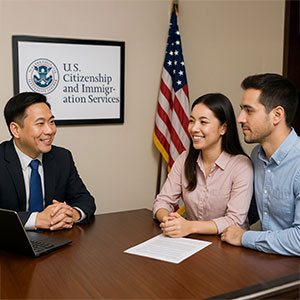
Step 6: Attend the N-600 interview (if required)
If USCIS requires an interview, a USCIS officer will:
- Review the N‑600 application
- Verify the identity of the applicant
- Confirm the parent‑child relationship
- Review the parent’s citizenship and physical presence history (if relevant)
- Ask questions about the documents and eligibility
In many straightforward cases, no interview will be required.

Step 7: Attend the Oath Ceremony and Receive the Certificate of Citizenship
If USCIS approves the N‑600, the process is not fully complete until the applicant takes the Oath of Allegiance (if required) and receives the Certificate of Citizenship.
- Oath Ceremony: USCIS may schedule an oath ceremony, especially for adult applicants. At this ceremony, the applicant formally swears allegiance to the United States (unless the oath is modified or waived, such as for certain minors or individuals with disabilities).
- Issuance of the Certificate of Citizenship: After the oath is administered (or waived, if applicable), USCIS will issue the Certificate of Citizenship. This document is permanent proof of U.S. citizenship and can be used to:
- Apply for a U.S. passport
- Prove citizenship to employers, schools, and government agencies
- Avoid relying on a Green Card as proof of status
The Certificate of Citizenship should be kept in a safe, secure place, as replacing it later can be time‑consuming and expensive.
Why it’s wise to consult an attorney before filing the N‑600
The N‑600 process looks simple on paper, but eligibility rules are highly technical and depend on:
- Complex citizenship laws that changed over time
- The parent’s status and physical presence history
- The child’s age, residence, and custody history
An experienced immigration attorney can:
- Confirm whether the person actually qualifies for citizenship
- Identify which law applies based on the date of birth
- Help gather the right evidence
- Avoid mistakes that lead to delays or denials
For families, especially those with older children or complicated histories, a legal review before filing can prevent years of confusion and uncertainty. For more information on the N-600 application process, call (281) 777‑1236 to schedule a consultation.
Common Questions We Can Help You With
- What is the N‑600 application
- How do I apply for a Certificate of Citizenship
- Who qualifies to file the N‑600
- Should I apply for a U.S. passport or file the N‑600
- What happens if my N‑600 was previously denied
- Can I file the N‑600 more than once
- What documents are needed for the N‑600
- How long does the N‑600 process take
- What is the difference between the N‑600 and a U.S. passport
- Do I need a lawyer for the N‑600
- How do I prove automatic U.S. citizenship
- What is the physical presence requirement for citizenship through parents
- Do I need an interview for the N‑600
- What happens at the N‑600 interview
- Does the N‑600 require biometrics
- How do I track my N‑600 case
- What happens after the N‑600 is approved
- Is there an oath ceremony for the N‑600
- How do I get a Certificate of Citizenship for my child
- Can adults file the N‑600
- What is the difference between N‑600 and N‑600K
- Can I apply for a passport after receiving the Certificate of Citizenship
- What happens if my N‑600 is denied
- How much does the N‑600 cost
- Can adopted children qualify for the N‑600

Call For A Free Consultation*
(281) 777-1236